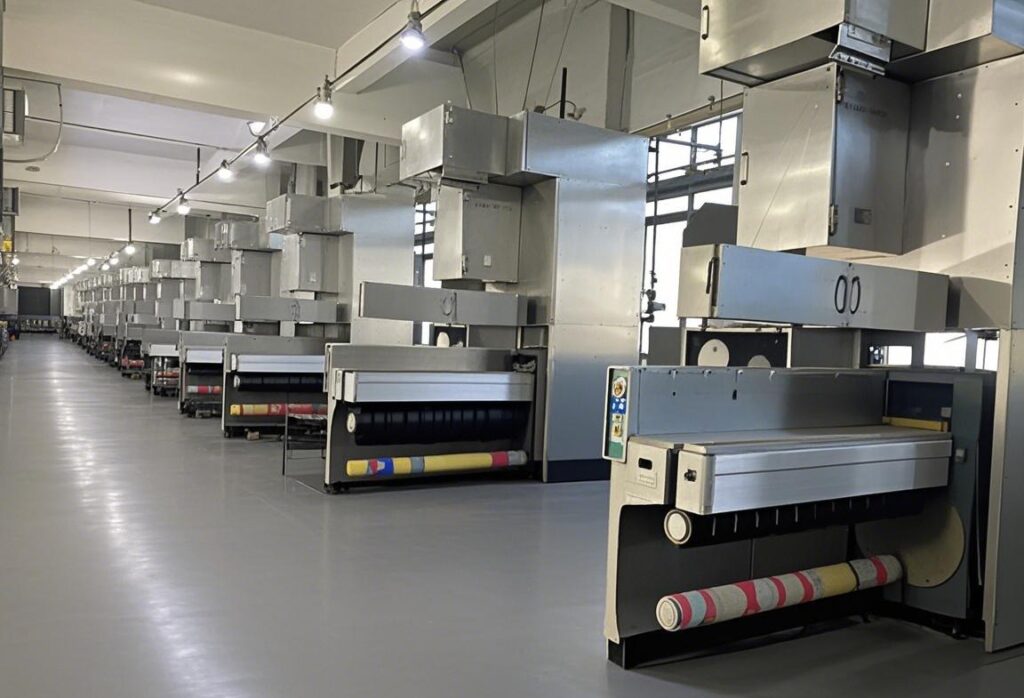
Polypropylene Bulk Continuous Filament (PP BCF) has established itself as a core material in the global textile and industrial sectors, renowned for its lightweight properties, excellent durability, cost-effectiveness, and superior bulkiness. As downstream applications expand into automotive interiors, home textiles, and infrastructure, coupled with the global push for sustainability and intelligent manufacturing, PP BCF technology is undergoing profound transformations. This article explores the fundamental processing principles of PP BCF, traces its technological evolution, and analyzes the latest trends shaping its future development.
1. Core Processing Principles of PP BCF Technology
PP BCF refers to bulked continuous polypropylene filaments produced through an integrated process that combines extrusion, cooling, drawing, texturizing, and winding. Unlike conventional fibers, the key advantage of PP BCF lies in its controlled crimp structure, which endows the material with exceptional bulkiness and elasticity. The production workflow consists of six critical stages, each meticulously controlled to ensure consistent fiber performance:
1.1 Raw Material Dosing and Melting
Polypropylene pellets, often blended with functional masterbatches (e.g., flame-retardant, anti-static additives) or recycled PP (rPP) granules, are fed into a precision dosing system to ensure uniform mixing. The mixture is then conveyed to a screw extruder, where it is heated to a molten state (typically 160–220℃) through a combination of external heating and frictional heat generated by screw rotation. Strict control of the melt flow index (MFI) is essential to maintain processing stability and fiber uniformity.
1.2 Filtration, Metering and Spinning
The molten PP is filtered through high-precision stainless steel screens to remove impurities such as particles and grease, preventing defects in the final filaments. A metering pump then delivers the purified melt to the spinneret at a constant flow rate and pressure, ensuring precise fiber fineness control. The spinneret, equipped with hundreds of micro-orifices, extrudes the melt into thin filaments, whose cross-sectional shape and diameter are determined by the orifice design.
1.3 Cooling and Solidification
The extruded filaments enter a spinning chamber, where they are uniformly cooled by conditioned air (constant temperature and humidity) to solidify rapidly. Uneven cooling can lead to inconsistent crystallization and crimp stability, so modern lines adopt advanced airflow distribution systems to optimize cooling efficiency and filament quality.
1.4 Drawing and Molecular Orientation
The solidified filaments pass through a series of heated godet rollers with varying rotational speeds, creating a speed differential that stretches the fibers. This drawing process enhances molecular chain orientation, improving the fiber’s tensile strength and dimensional stability. The drawing ratio and godet temperature are precisely adjusted based on the target fiber properties, typically achieving a breaking strength of 3.5–5.0 cN/dtex.
1.5 Texturizing (Crimping) and Setting
Texturizing is the defining step in PP BCF production, as it imparts the fiber’s characteristic bulkiness. The drawn filaments are fed into a texturizer (often hot-air based), where they are subjected to heat and mechanical manipulation to form permanent crimps. Post-texturizing, the filaments pass through a cooling drum to fix the crimp structure—advanced cooling systems, such as Oerlikon Neumag’s extended-dwell drums, can prolong cooling time to 2.5 seconds, increasing crimp levels by over 30% and enhancing carpet coverage performance. SML’s seamless cooling drums further optimize softness by ensuring uniform heat dissipation.
1.6 Winding and Finishing
The textured filaments are wound into uniform packages by high-speed winding machines, which maintain stable tension to avoid filament breakage and ensure consistent roll quality. Depending on end-use, additional processes such as twisting or surface treatment may be applied to enhance fiber performance in downstream applications like carpet tufting.
2. Technological Evolution of PP BCF
Over the past two decades, PP BCF technology has evolved through three key phases, driven by the pursuit of efficiency, quality, and cost optimization:
2.1 Initial Adoption and Import-Dependent Phase (2000–2010)
During this period, global PP BCF production relied heavily on imported equipment from leading manufacturers such as Oerlikon Neumag, SML Maschinengesellschaft, and Vandewiele. Domestic production lines were limited in scale, with low processing speeds (below 800 m/min) and high dependency on virgin PP raw materials. Product quality was inconsistent, with issues such as uneven crimp and poor color fastness, restricting applications to mid-to-low-end markets.
2.2 Localization and Efficiency Improvement Phase (2011–2020)
Domestic equipment manufacturers, including Jiangxi Hongyuan and Wuxi Hongyuan, achieved breakthroughs in core component localization, developing integrated lines with modular designs. Key advancements included improved temperature control precision (±0.5℃ for godet rollers), closed-loop tension control systems, and increased processing speeds (up to 1,200 m/min). These innovations reduced production costs by 15–20% and improved crimp uniformity (CV value below 2.0%), enabling domestic PP BCF to penetrate high-end carpet and automotive markets.
2.3 Intelligent and Sustainable Transformation Phase (2021–Present)
Current development focuses on low-carbon manufacturing and digitalization. Modern PP BCF lines integrate AI-driven process optimization, real-time parameter monitoring, and waste heat recovery systems. The adoption of recycled PP blending and bio-based polypropylene has become mainstream, while intelligent quality control systems (e.g., artificial neural network models) predict crimp and brightness values, minimizing defects and improving production efficiency.
3. Latest Trends in PP BCF Technology and Market
Driven by policy mandates, market demand shifts, and technological innovation, PP BCF is evolving toward sustainability, intelligence, high performance, and application diversification:
3.1 Circular Economy and Green Manufacturing
Global carbon neutrality goals and policies such as the EU’s CBAM have accelerated the adoption of eco-friendly practices in PP BCF production. Manufacturers are increasingly integrating recycled PP (rPP) into their formulations, with advanced lines supporting up to 40% rPP blending without compromising fiber performance. Bio-based PP, derived from renewable feedstocks like corn starch, is also gaining traction in automotive and home textile applications. Energy-saving technologies, including electric heating systems and waste heat recovery, have reduced unit energy consumption by over 12% compared to traditional lines. By 2031, eco-friendly PP BCF variants are projected to account for 28% of the global market, up from 15% currently.
3.2 Intelligence and Digitalization
The integration of artificial intelligence (AI), industrial internet, and predictive analytics is reshaping PP BCF production. AI-driven models, such as artificial neural networks (ANN), are used to optimize processing parameters (extruder temperature, drawing ratio, cooling time) and predict fiber properties (crimp, brightness, softness), reducing defect rates by 25–30%. Manufacturing Execution Systems (MES) enable end-to-end traceability, while predictive maintenance minimizes downtime by monitoring equipment health in real time. By 2025, over 55% of global PP BCF production lines are expected to adopt smart manufacturing technologies.
3.3 High-Value-Added Functional Products
Market demand is shifting toward specialized PP BCF variants with enhanced functionalities. Flame-retardant PP BCF is widely used in automotive interiors and public building carpets, while anti-static and anti-microbial variants are favored in electronic and healthcare environments. Ultra-fine denier PP BCF (5–23 dtex), enabled by advanced texturizing technology, offers improved softness and coverage for high-end carpets. Modular production lines allow quick switching between product types, catering to customized demands from downstream sectors. In the automotive industry, lightweight PP BCF is increasingly adopted for interior trims, driven by the growth of new energy vehicles (NEVs) and the push for vehicle weight reduction.
3.4 Market Expansion and Regional Growth
The global PP BCF market is poised for steady growth, with a projected CAGR of 7.8% from 2025 to 2031, reaching 280 million tons by 2031. China, as the fourth-largest PP BCF producer globally, leads regional growth, with its market size expected to expand from 150 billion RMB in 2025 to 350 billion RMB by 2031 (CAGR 8.5%). The automotive interior segment dominates demand, accounting for over 40% of the market, followed by home textiles and industrial filtration. Regionally, East China maintains its leading position due to a complete industrial chain, while West China is growing rapidly (CAGR 9.8%) driven by policy support and infrastructure development.
4. Future Outlook
PP BCF technology will continue to converge with sustainability, intelligence, and functionalization in the coming decade. Breakthroughs in bio-based materials and recycled fiber processing will further reduce environmental impact, while AI-driven process optimization will enhance production efficiency and product consistency. The market will see increased consolidation, with leading enterprises expanding through mergers and acquisitions, while small and medium-sized players focus on niche segments. As applications extend into high-end automotive, smart home, and environmental protection sectors, PP BCF will solidify its position as a versatile and indispensable material in the global fiber industry.